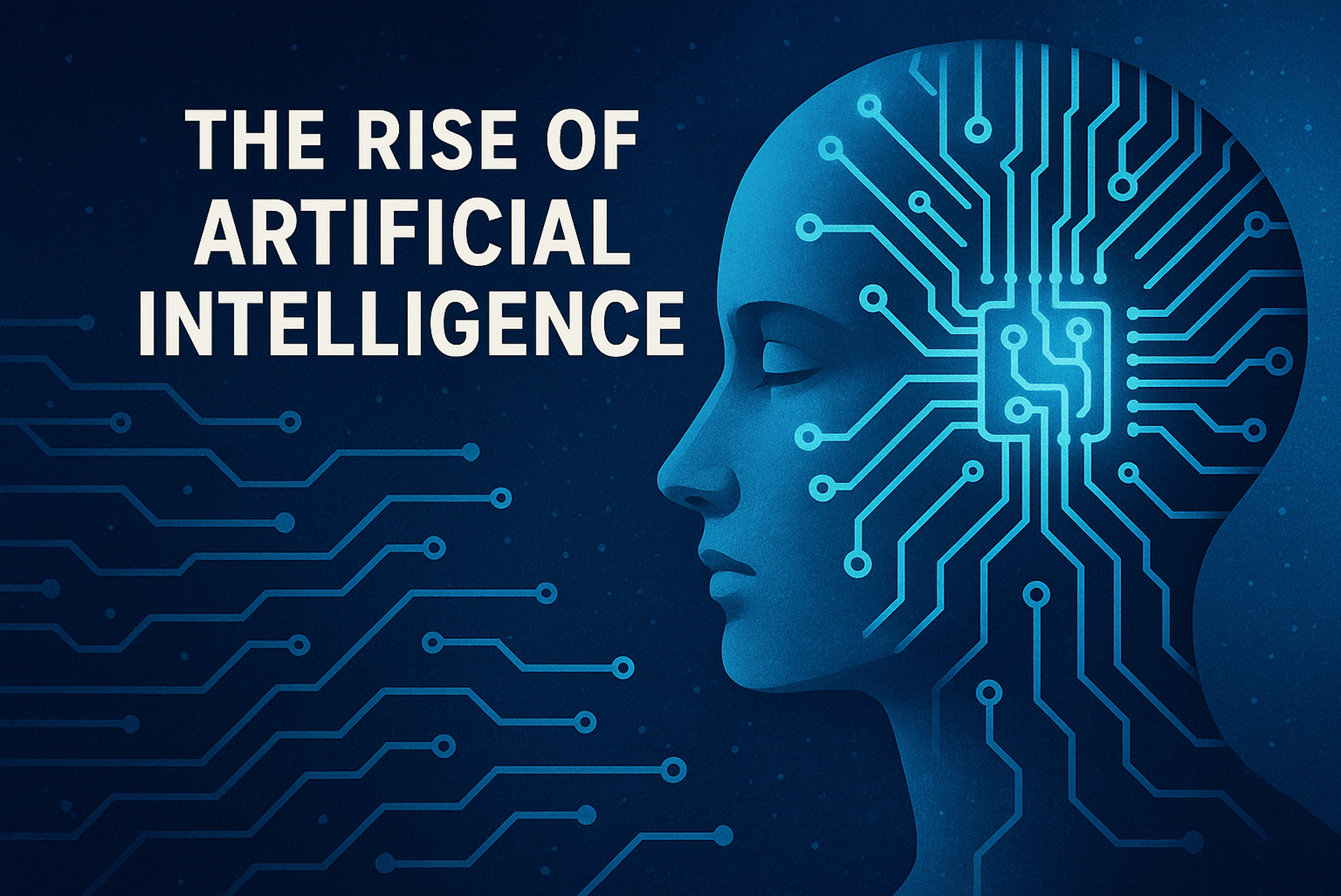
The Rise of Artificial Intelligence
AI is revolutionizing industries by automating tasks, improving efficiencies,
and enhancing decision-making processes. It's being applied in healthcare,
finance, education, transportation, and more.
Key Areas of Impact: Automation of repetitive tasks, data-driven decision making,
predictive analytics, and personalization of services (e.g., recommendation systems).
Read More
Advancements in Quantum Computing
Quantum computing is an emerging field that uses quantum bits (qubits) to process
information. Unlike classical computers, quantum computers can solve complex problems
exponentially faster.
Applications: Quantum simulations for drug discovery, optimization in logistics,
cryptography, and artificial intelligence algorithms.
Read More
Augmented Reality and Virtual Reality
AR and VR technologies are enhancing user experiences in various fields,
from gaming and entertainment to education and healthcare.
Examples: VR for immersive learning experiences, AR for enhanced retail
experiences (virtual try-ons), and VR for medical training and simulations.
Read More
Robotics and Automation
Robotics and automation are transforming industries by taking over repetitive
tasks and enabling more precise operations. This is impacting manufacturing,
logistics, and even healthcare.
Impact: Increased productivity, reduced human error, and improved safety,
with robots performing dangerous tasks (e.g., bomb disposal, deep-sea exploration).
Read More

5G and the Future of Connectivity
5G networks promise ultra-fast internet speeds and low latency, enabling the full
potential of the Internet of Things (IoT), autonomous vehicles, and real-time
communications.
Impact: Faster data transmission, improved connectivity for remote surgeries,
and enhanced real-time data analysis in smart cities and IoT applications.
Read More
The Evolution of Human-Machine Collaboration
AI is not just about replacing human work but enhancing human capabilities,
from boosting productivity to aiding in complex problem-solving.
Examples: AI assistants that help manage schedules, AI in design
tools that complement creativity, and AI-enhanced medical devices
for better patient outcomes.
Read More